What is happening in the Middle East today cannot be viewed merely as another geopolitical confrontation between Iran and the United States. The consequences of this conflict are not limited to missile strikes, military deployments, or diplomatic statements. Its effects are gradually spreading into global trade, energy markets, currencies, and the economies of countries thousands of kilometres away.
India may be one of the countries that faces some of the most serious consequences. Recent developments indicate that American military action around Iranian strategic zones has resumed. Although there were no casualties and therefore no formal declaration of ceasefire violation, the larger message appears clear. Neither side seems willing to step back. More importantly, both sides increasingly appear unwilling to trust each other.
At the centre of this crisis lies one of the most important waterways on earth: the Strait of Hormuz.
Iran says America must move first. America says Iran must move first. The result is a prolonged deadlock that has now continued for months.
And that is where India’s concern begins.
Rising Oil Prices Have Always Shaken India
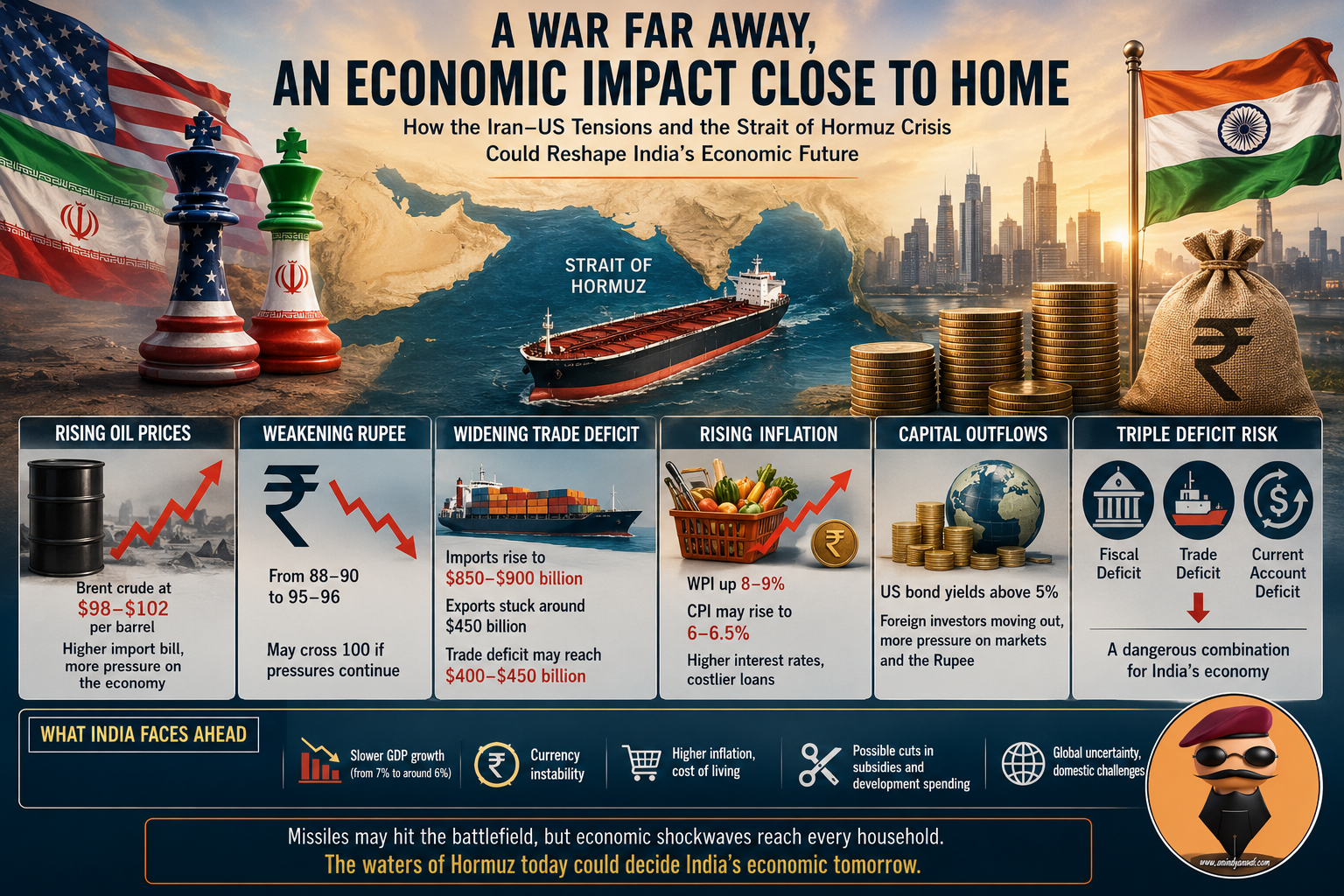
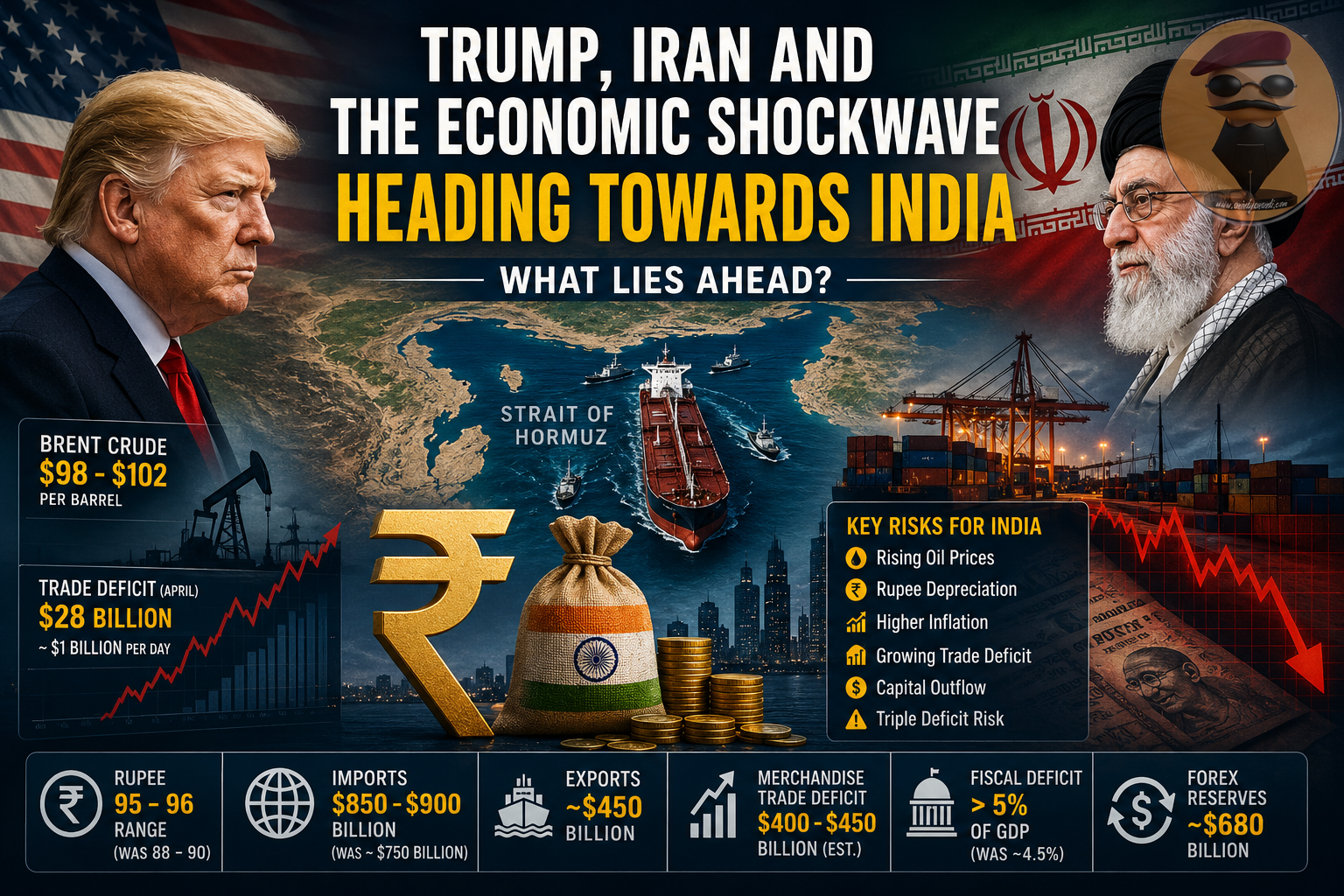
As of May 2026, Brent crude prices are hovering around the 98 to 102 dollar per barrel range. If the current situation continues for another five or six months, India may face significant economic stress.
India remains one of the world’s largest oil importers. The country consumes nearly 5.5 million barrels of oil every day, and approximately 85 to 90 percent of that demand is met through imports.
This means that even a 10-dollar increase in crude oil prices can dramatically increase India's import bill.
Earlier estimates suggested oil imports could remain around 135 billion dollars. Under current conditions, that figure could rise toward 190 billion dollars.
This is not simply an accounting issue. It means a greater outflow of dollars from India’s economy.
Why Is the Rupee Weakening?
Before the Iran conflict intensified, the Indian Rupee traded around the 88 to 90 range against the dollar. It has now moved toward 95 to 96.
The Reserve Bank of India has intervened in the market and temporarily stabilized the situation. However, an important question remains:
How long can the RBI continue defending the currency?
At present, intervention levels are estimated at approximately 1 to 2 billion dollars per day. While India’s foreign exchange reserves remain close to 680 billion dollars, no reserve pool is unlimited.
If the current pressures continue, a Rupee crossing 100 per dollar cannot be ruled out. Under severe conditions, even levels near 108 are being discussed in certain projections.
A three-digit exchange rate is not only an economic event. It becomes a psychological event.
India's Trade Deficit Is Growing Rapidly
The first month of the current financial year already produced a trade deficit of nearly 28 billion dollars.
That effectively means an average deficit of roughly 1 billion dollars every day. India imported nearly 72 billion dollars worth of goods during the month, while exports stood at around 44 billion dollars.
If this trend continues, annual deficits could cross 365 billion dollars or even higher.
Imports previously estimated at near 750 billion dollars could now move toward 850 to 900 billion dollars.
Exports, meanwhile, may remain stuck around 450 billion dollars.
The result is straightforward.
A merchandise trade deficit approaching 400 to 450 billion dollars.
Has Make in India Succeeded?
This situation raises an uncomfortable question.
If domestic manufacturing expansion had succeeded at the desired scale, import dependence would not be increasing at this pace.
India uses smartphones assembled domestically, but many critical components continue to come from overseas.
Semiconductors, telecom equipment, machinery, speciality chemicals, defence systems, and industrial components remain heavily import-dependent.
As the Rupee weakens, the cost of all these products rises.
The Real Inflation Shock May Still Be Ahead
Wholesale Price Index numbers have reportedly increased by nearly 8 to 9 percent.
Historically, wholesale inflation eventually passes through to retail markets.
This suggests ordinary citizens may face much stronger inflationary pressures in the coming months.
Consumer inflation, previously expected to be around 4 per cent, may move toward 6 to 6.5 per cent. The implications are serious.
Interest rates may rise.
Borrowing may become costlier.
Businesses could face shrinking margins and increasing pressure.
Foreign Investment Could Also Slow Down
United States bond yields have crossed 5 percent.
Foreign investors may ask a simple question:
Why take market risk in India when safer returns are available in the United States?
As a result, foreign portfolio capital has increasingly started moving out.
This places further pressure on the Rupee.
Which Sectors Could Face The Biggest Impact?
Textiles could suffer as Western demand weakens.
Engineering goods may face pressure.
Electronics manufacturing could become more expensive due to rising imported input costs.
Speciality chemicals remain heavily dependent on Chinese imports.
The gems and jewellery sector could face disruptions.
Auto component costs may increase significantly.
Triple Deficit Risk
An even larger economic danger appears to be emerging.
The Triple Deficit Risk.
First comes fiscal deficit.
Government revenues come under pressure.
Second comes the trade deficit.
Imports rise while exports remain stagnant.
Third comes the current account deficit.
The economy requires more foreign currency than it possesses.
Together, these three deficits can create a highly dangerous situation.
What Happens Next?
If tensions around Hormuz worsen and oil prices remain close to 100 dollars, India's economic growth may slow considerably. Questions will arise over currency stability. Inflation may rise further. Governments may be forced to adopt tighter fiscal measures. Subsidies may be reduced. Development spending could face cuts. Overall economic growth may weaken. The biggest challenge for India today may not be war itself. It may be the economic consequences of war. Because missiles fall on battlefields, but their economic shockwaves eventually reach ordinary households.
And the answer to how severe that shock becomes may ultimately depend on the waters of Hormuz.




Discussion