Greenland Is Not Trump’s Joke. It Is the Next Strategic Fault Line
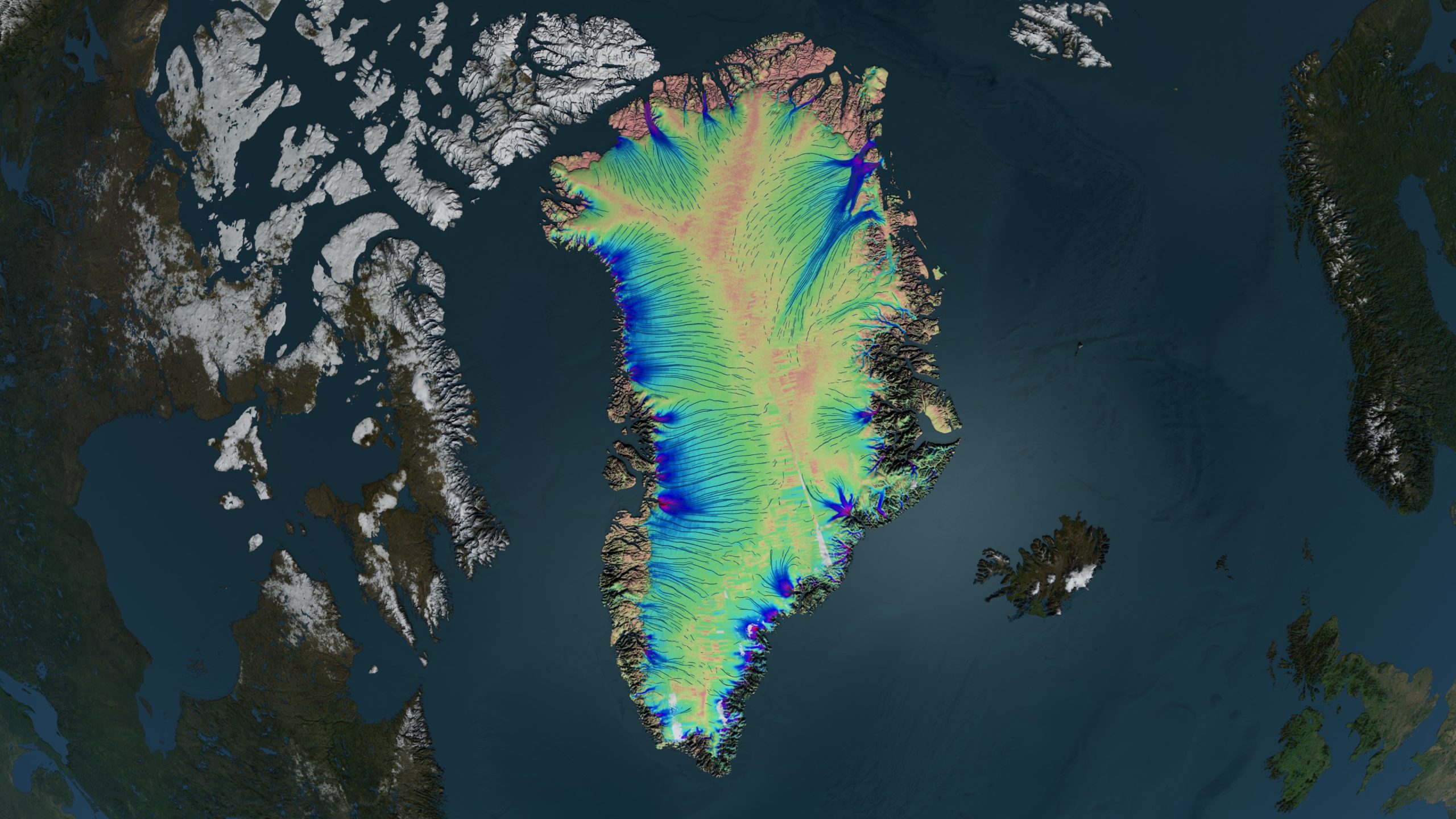
When Donald Trump spoke about buying Greenland, most of the world laughed. In India too, the remark was treated as political theatre. That reaction missed the point. Greenland is no punchline. It is rapidly becoming one of the most strategically contested territories on the planet, and the contest has direct implications for India’s security, technology supply chains, and geopolitical choices.
At the heart of this struggle lies China’s quiet but systematic push into the Arctic.
Greenland sits between North America and Europe, astride emerging Arctic shipping routes, and above vast reserves of uranium, rare earth elements, and critical metals essential for modern technology. As climate change melts Arctic ice, the island has moved from the margins of world politics to its centre.
How China Entered - and Was Pushed Back
The first clear confrontation came in 2018. Greenland invited international bids to build three new airports. Chinese firms submitted competitive proposals and were close to winning the contract. For Washington, this crossed a red line. Airports in the Arctic are never merely civilian assets. Their potential military use is obvious.
The United States did not place a direct bid. Instead, it pressured Denmark, which retains sovereignty over Greenland, to intervene. Copenhagen stepped in with funding, and Chinese companies were pushed out. The signal was unmistakable: Chinese infrastructure would not be allowed in Greenland.
This was not an isolated incident. It was a preview.
Uranium, Rare Earths, and Strategic Panic
The stakes rose sharply with the Kvanefjeld deposit, one of the world’s largest reserves of uranium and rare earth elements. Although mining rights were held by an Australian firm, a Chinese company, Shenghe Resources, controlled key processing rights.
For Western powers, this was unacceptable. Uranium sits at the intersection of civilian energy and nuclear weapons capability. Allowing China access to Arctic uranium processing was viewed as a strategic risk too far.
By 2023, Chinese involvement was shut down. Beijing’s response was not diplomacy, but litigation.
Lawfare as Pressure
Chinese interests filed an international lawsuit seeking roughly $11.5 billion in compensation. Greenland’s annual economy is barely a third of that amount.
This is not about damages. It is pressure by design. Legal warfare allows China to weaken smaller economies and force dependence on external patrons. In Greenland’s case, that means Denmark, the European Union, and the United States.
India should recognise this tactic. It mirrors Chinese behaviour elsewhere, from port disputes to infrastructure contracts across Asia and Africa.
The Real Trigger: Critical Metals
The real reason Greenland now matters so urgently lies elsewhere.
In late 2025, China imposed sweeping export bans on gallium and germanium, two metals vital for semiconductors, satellites, fighter aircraft, and renewable energy systems. China controls nearly all global processing capacity for both.
This exposed a dangerous truth. The world’s most advanced technologies depend on supply chains that Beijing can choke at will.
Recent surveys suggest Greenland holds significant deposits of these metals. That discovery changes everything. Whoever controls access to Greenland’s resources can reduce dependence on China or reinforce it.
For India, which is pushing semiconductor manufacturing, space capability, and defence indigenisation, this is not a distant Arctic story. It is a supply-chain warning.
Shipping Routes and Strategic Geography
Greenland also sits astride emerging Arctic sea routes that could cut shipping times between Asia and Europe by nearly three weeks. China openly calls this its future “Polar Silk Road.”
If these routes mature, control over Arctic chokepoints will shape global trade. Greenland is one of them.
Why India Should Pay Attention
India is not an Arctic power, but it is deeply exposed to Arctic outcomes. Our dependence on imported critical minerals, advanced chips, and global trade routes makes Arctic geopolitics impossible to ignore.
China understands this. That is why it calls itself a “near-Arctic state” despite geography saying otherwise.
India must read Greenland not as an isolated theatre, but as part of the same strategic pattern visible in the South China Sea, Africa, and the Indian Ocean.
But, while China builds leverage and the US blocks it, India absorbs the consequences.
Greenland should be read in India not as a distant geopolitical curiosity, but as a warning. The future balance of power will not be decided only in the Himalayas or the Indo-Pacific, but in places where minerals, climate change, and chokepoints intersect.
If China succeeds in shaping Arctic supply chains and shipping routes, India’s strategic autonomy narrows. If the US succeeds in countering China without building inclusive alternatives, India risks being locked into dependence rather than partnership.
From the Himalayas to the Arctic, Greenland has become yet another Strategic Blind Spot for India.
The Ice Is Melting. So Are Illusions.
Greenland is not a frozen island waiting to be bought. It is a test case for how power will be exercised in the 21st century: through minerals, contracts, courts, and climate-driven geography.
Trump’s words were clumsy. China’s actions are methodical.
India would do well to watch closely. What is unfolding in the Arctic today will shape the strategic balance tomorrow.

Discussion